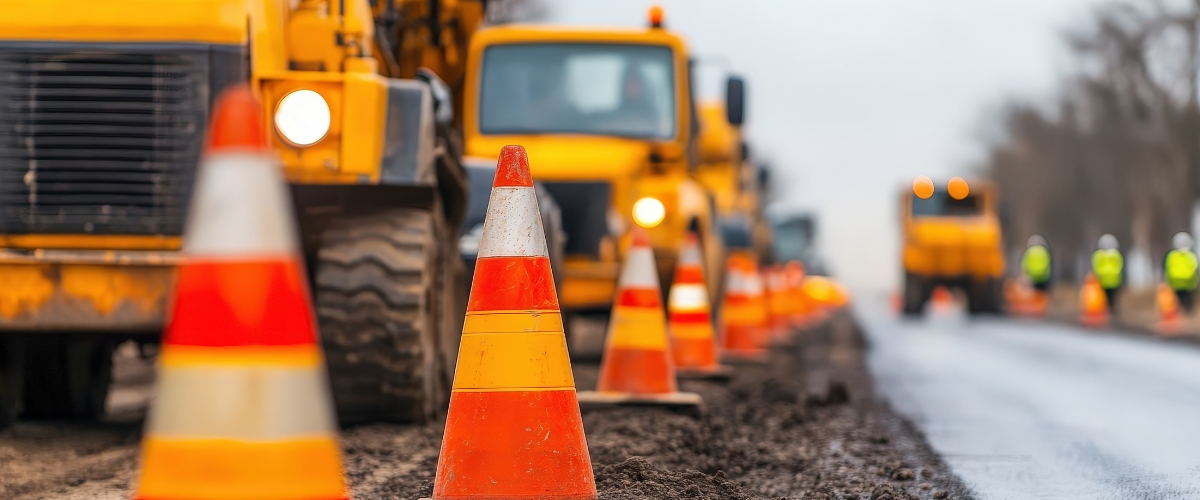
Construction vehicles are a regular part of life across Georgia. From roadwork and commercial projects to residential developments and utility work, drivers often share the road with cement mixers, dump trucks, flatbed trucks, and other large construction-related vehicles.
Most of the time, these vehicles move safely through traffic and work zones. However, the most recent available data for Georgia from the Federal Motor Carrier Safety Administration (FMCSA) indicates that at least 1,809 construction vehicles were involved in crashes in 2025.
When a construction vehicle crash happens, insurance and liability issues can be complex. The answer is not always as simple as “the driver caused it.” Depending on the facts, responsibility may involve the driver, the driver’s employer, a contractor, a site owner, a government agency, or another party connected to the vehicle or worksite.
Why Construction Vehicle Crashes Happen
Construction vehicles create different risks than ordinary passenger vehicles. Their size, weight, and the environments in which they operate can make crashes more likely when drivers, companies, or other responsible parties fail to use proper care.
Common factors may include:
Long stopping distances. Heavy vehicles often need more distance to slow down or stop, especially near intersections, traffic backups, or active work zones.
Wide turns. Many construction vehicles require extra room to turn, which can create a danger if the vehicle swings into another lane or crosses into the path of nearby traffic.
Large blind spots. Construction vehicle drivers may have difficulty seeing cars, cyclists, pedestrians, or workers beside or behind the vehicle.
Heavy or shifting loads. Unbalanced or unsecured materials can increase the risk of rollovers, loss of control, or debris entering the roadway.
Changing worksite conditions. Construction areas can be noisy, crowded, and constantly shifting. Vehicles may enter or leave traffic from unexpected locations, and drivers may have limited visibility.
Driver error. Fatigue, distraction, speeding, unsafe backing, poor training, or failure to follow safety procedures can all contribute to a serious crash.
Because every crash is different, determining what happened often requires a careful review of the scene, the vehicle, the driver’s conduct, company records, contracts, maintenance history, and available photos or video.
Who May Be Responsible After a Construction Vehicle Crash?
Liability in a construction vehicle crash can be complex. More than one person or company may have contributed to the collision, and each potential source of responsibility should be evaluated based on the facts. When investigating this type of crash, a personal injury attorney may evaluate several potential sources of responsibility, including:
The Construction Vehicle Driver
The driver is often the first place an investigation begins. Like other drivers, construction vehicle operators have a duty to use reasonable care behind the wheel.
A driver may be negligent if they were speeding, distracted, impaired, following too closely, making an unsafe turn, backing without proper caution, failing to yield, or operating a vehicle they knew was unsafe. A driver may also be responsible if they failed to follow required safety procedures for entering, exiting, or working near an active roadway.
The Driver’s Employer
In some cases, the driver’s employer may also be responsible for the crash. Under Georgia law O.C.G.A. § 51-2-2, an employer may be liable for negligent acts committed by an employee while the employee is acting within the scope of their employment.
Construction and hauling work can also be done by independent contractors rather than employees, which can add another layer of complexity. Generally, a hiring company is not responsible for a contractor’s negligence, but Georgia law has exceptions. Under O.C.G.A.§ 51-2-5, a company may still be part of the liability analysis if it kept the right to control how and when the work was done, or if it stepped in and took control in a way connected to the crash.
The employer may also be responsible if the company failed to properly train the driver, hired someone who was not qualified, ignored safety concerns, failed to maintain the vehicle, or allowed unsafe driving practices to continue.
These issues are fact-specific. An attorney can review employment records, training materials, vehicle inspection records, maintenance logs, and company policies to help determine whether the employer may share responsibility.
Contractors and Subcontractors
Construction projects often involve multiple companies working together. A general contractor may oversee the job, while subcontractors may handle specific parts of the work, including hauling, grading, paving, demolition, or material delivery.
If a contractor created unsafe traffic conditions, failed to coordinate safe vehicle movement, ignored site safety obligations, or hired an unsafe subcontractor, that contractor may be part of the liability analysis. The key question is what role the contractor or subcontractor had in controlling the work, vehicle movement, or conditions that contributed to the crash.
Property or Job Site Owners
A property or job site owner may also be part of the liability analysis, especially when the crash occurs at or near a construction entrance, private development, commercial property, or worksite.
Site ownership alone does not automatically make someone responsible. Contracts, control over the worksite, knowledge of dangerous conditions, and responsibility for traffic flow or site access may all matter. These questions can become complicated quickly, especially when multiple contractors attempt to shift responsibility between the owner, contractor, and subcontractors.
Government Agencies
Some construction vehicle crashes involve roadwork connected to a city, county, state, or federal project. If a government agency owned the vehicle, employed the driver, controlled the roadway, or was responsible for the project, special rules may apply.
Claims involving government entities can be different from ordinary injury claims. Sovereign immunity, ante litem notice requirements, deadlines, and exceptions may affect whether and how a claim can be brought. Because these rules are technical and time-sensitive, an injured person should speak with an attorney as soon as possible if a government agency may be involved.
Why Construction Vehicle Cases Can Become Complicated
Construction vehicle crash claims often involve more than a police report and an insurance claim. There may be multiple companies, several insurance policies, contract provisions, maintenance records, driver logs, safety procedures, government rules, and questions about who controlled the work being performed.
Injured people may also face finger-pointing between parties. One company may blame the driver. Another may blame the contractor. A contractor may point to a subcontractor. An insurer may argue that the crash was caused by someone else entirely.
That is why a careful investigation matters. Identifying all potentially responsible parties can be important when injuries are serious and the available insurance coverage becomes a central issue.
What Should You Do After a Construction Vehicle Crash?
After any serious crash, your health and safety come first. If you are hurt, seek medical attention and follow your doctor’s instructions. If you are able, it can help if you preserve information connected to the crash, including photos, witness names, police report information, insurance details, and any communication from the companies or insurers involved.
It is often wise to be cautious about giving recorded statements, signing documents, or accepting an early settlement before you understand your injuries and your options. What may look like a simple traffic crash at first can become more complicated once multiple companies, contractors, or government entities are involved. An attorney can help you understand which steps may make sense based on the facts of your situation.
Talk With Montlick After a Construction Vehicle Crash
A construction vehicle crash can leave you dealing with pain, medical bills, missed work, vehicle damage, and pressure from insurance companies. You should not have to carry the added burden of sorting through complicated liability questions on your own.
Montlick Injury Attorneys can listen to what happened, review the details, and help you understand your next steps. Every case is different, and the right path depends on the facts. If you were injured in a crash involving a construction vehicle in Georgia, contact us or call 800-529-6333 for a free consultation with an attorney.
Construction Vehicle Crash FAQs
Who may be responsible in a construction vehicle crash?
Construction vehicle drivers often have additional duties and responsibilities to avoid causing injuries. If drivers fail to meet these duties and cause a crash with another driver, they may be responsible for the crash. If the conditions around the worksite were unreasonably unsafe and helped lead to the crash, the contractors may also share in some liability.
How do I know if a government agency is involved?
It is not always obvious, and you may not be able to tell just by looking at a scene. A crash near roadwork or involving a city, county, state, or federal vehicle or crew may point to a public project. But private contractors often work on public projects, too. If possible, take photos of project signs, permit signs, agency names, contractor names, and vehicle markings so an attorney can help identify who may be connected to the crash.
What if I was working in or operating a construction vehicle when the crash happened?
If you were injured while working near or driving a construction vehicle involved in a crash, you may have a workers’ compensation claim. Workers’ compensation claims are separate from a personal injury case and do not require a showing of fault. Because these claims can affect each other, it can be helpful speaking with a workers’ compensation attorney who can review both.