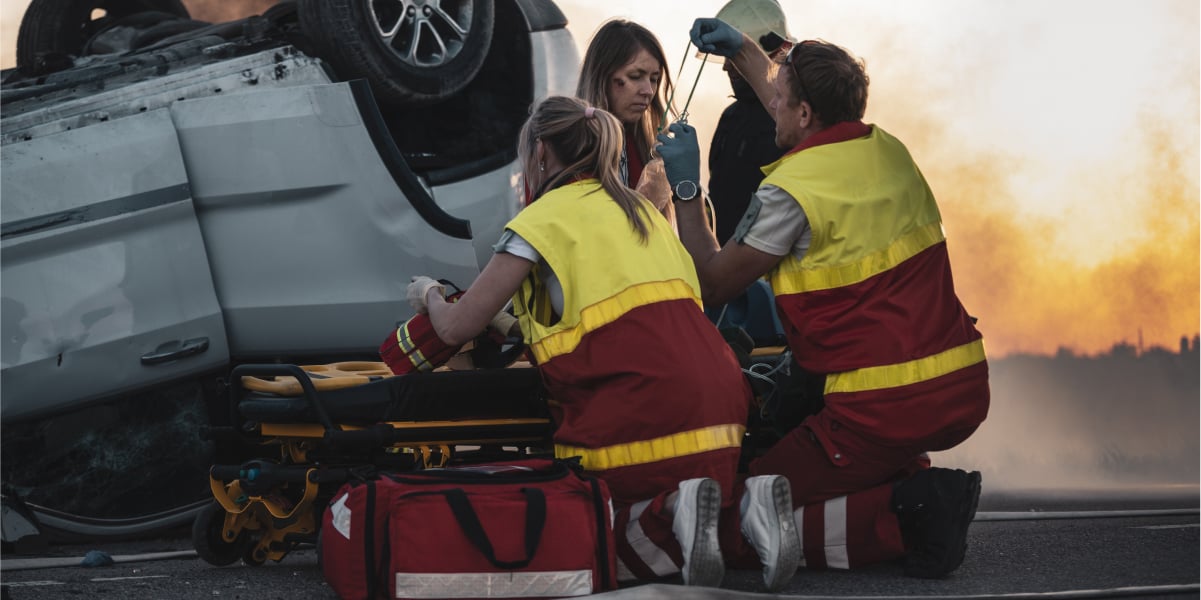
A serious car accident can result in life-changing injuries. Victims may be facing pain, medical bills, missed income, and uncertainty about what comes next. The legal system gives injured people a way to seek accountability through a personal injury claim or lawsuit, which can help pursue compensation for medical expenses and other accident-related losses.
But when the facts of a crash are disputed, the path to justice can feel overwhelming. It is common for people involved in the same accident to remember the moments before impact differently. That does not always mean someone is being dishonest. Crashes happen suddenly, causing stress and confusion. Drivers, passengers, and witnesses may have different recollections of what happened.
That is why evidence matters. Photos, police reports, witness statements, medical records, vehicle damage, and other details can help tell the full story. Fortunately, technology has given us a wide range of solutions to uncover evidence.
Types of evidence that law firms have for many years used when attempting to assign fault and causation include the following:
- Law enforcement accident report
- Witness statements
- Video footage if available (i.e. red light cameras or surveillance videos from businesses)
- Photos of vehicle damage and positions of the vehicles
- Public records regarding prior accidents in the location
- Analysis of medical experts
- Visual inspection of the vehicles and any debris
- Medical records
New technology can help bring clarity to one of the most important questions after a crash: what really happened? When the people involved remember the accident differently, digital evidence may help fill in the gaps, support the timeline, and give investigators a more complete picture. Together, these tools can help move a case beyond conflicting memories and toward a more complete, evidence-based understanding of the crash.
Location, Movement, and Communication Data
It is easy to forget how much our everyday devices record as we move through the world. Phones and other devices can create a digital trail of where someone was, how they were moving, and what may have been happening at the time of a crash. When an accident is disputed, this digital trail may help place key events in time and location, giving investigators a clearer picture of what happened.
GPS devices and navigation apps may show route history, estimated speed, stops, and direction of travel through smartphone navigation apps or standalone GPS devices.
Smartphone data may help show sudden movement, hard braking, or a sharp impact through built-in sensors like accelerometers and gyroscopes. Phone records may also help determine whether a driver was calling, texting, or using data near the time of the collision.
Wearables and fitness trackers may record steps, heart rate, and movement patterns around the time of the crash. In some cases, that information may help support the timing of an impact or provide context about how an injury occurred.
In-Vehicle Data and Telematics
Modern cars record important digital information that may help explain what happened before, during, and after a crash. When a collision is disputed, this data may help clarify the sequence of events and protect injured people from assumptions or incomplete accounts.
Event data recorders may capture details such as speed, braking, steering, throttle use, seatbelt status, and airbag deployment before and after impact. While many people associate this type of data with airplanes or commercial trucks, similar technology is now common in many late-model passenger vehicles.
Engine control modules and other onboard systems may store diagnostic codes, stability-control activity, or other vehicle events that can help investigators better understand how the vehicle was functioning and behaving before the crash.
Telematics systems, in‑vehicle devices and wireless networks that capture and transmit driving data, may also provide useful information. For example, the connected vehicle systems and plug-in devices used by some insurance companies may record trip history, speed patterns, and certain driving behaviors.
Dashboard infotainment systems can sometimes contain call logs, Bluetooth connections, navigation destinations, and limited location history. These details may help show who was connected to the vehicle, where the vehicle may have been headed, or whether communications were happening around the time of the crash.
Cameras and Scene Imaging
When facts are disputed, camera footage and scene imaging can help preserve what the roadway, vehicles, traffic signals, and surrounding area looked like before that evidence changes or disappears.
Built-in or aftermarket dashcams may provide time-stamped video of the road and, in some vehicles, the inside of the car. Depending on the camera, footage may come from the front, rear, side, or cabin-facing view. Not every dashcam captures or saves every event, so this evidence should be identified and preserved as soon as possible.
Traffic and red-light cameras may capture vehicle movement, intersection activity, and signal phases. This footage can help clarify where vehicles were, how they were moving, and what traffic controls were active near the time of impact.
Security cameras from nearby businesses or homes may show approach routes, the impact itself, or what happened immediately after the crash. Even partial footage can help establish timing, direction of travel, or vehicle positioning.
Law enforcement body-worn cameras and dashcams may record officer interactions, statements made at the scene, visible injuries, road conditions, and the final resting positions of the vehicles.
Drone photography and video can help investigators capture overhead views of the crash scene, vehicle locations, roadway layout, skid marks, debris fields, and surrounding conditions.
3D laser scanning, including LiDAR and terrestrial laser scanners, can precisely measure the scene and vehicle damage. This information may later support detailed analysis or creation of 3D models.
Photogrammetry software can turn overlapping photos or drone images into scaled 3D models of vehicles and crash scenes, helping investigators study the evidence long after the scene has been cleared.
Accident Reconstruction and Analysis
In more serious or complex crashes, investigators may use the digital evidence provided by cameras and imaging tools to recreate the moments before and during impact.
Computer crash reconstruction software can use physical and electronic evidence to model vehicle movement, estimated speeds, impact angles, and collision dynamics. This may help clarify how the crash unfolded when the accounts of those involved do not line up.
3D simulation and animation tools can convert reconstruction findings into visual sequences that are easier for adjusters, mediators, attorneys, and juries to understand. These visuals can help explain complex crash mechanics in a more accessible way.
Full-scale crash testing and modeling may be used in certain cases to compare actual vehicle damage with the crash scenario being claimed. Controlled testing or validated models can help determine whether the evidence supports the explanation being offered.
Roadway survey tools, including total stations and satellite-enabled positioning systems, can map lanes, curves, grades, fixed objects, and sightlines. This information may support analysis of visibility, stopping distance, vehicle paths to help determine whether a driver had enough time or space to avoid the collision.
Medical and Insurance Claims Evidence
Medical records and claims data can help show not only what happened at the scene, but how the crash affected the injured person’s health, recovery, and daily life. This evidence can be especially important when injuries are disputed, delayed, or more serious than they first appeared.
Electronic medical records provide time-stamped documentation of injuries, diagnostic findings, treatment plans, follow-up visits, and recovery progress. For injured people, these records are often central to showing what care was needed and how the accident changed their life.
Hospital imaging and biomechanical analysis tools may help connect crash forces to specific injuries. CT scans, MRIs, and related medical imaging can show trauma that may not be visible from the outside, while biomechanical analysis may help explain how the mechanics of a crash could have caused certain injuries. These tools are most often used in moderate to severe injury cases.
Insurance and claims system logs may show when the accident was reported, what information was provided, and how liability or coverage positions changed over time. These records can help reveal whether an insurer’s position is consistent with the facts and whether important details were recognized, delayed, or disputed.
Why Acting Quickly Can Matter
Every accident is different, and evidence should always be reviewed with care. But when evidence is preserved and analyzed properly, these tools can help personal injury attorneys uncover a clearer, more complete account of what happened and help protect injured people from confusion, disputed stories, or missing details that could affect their claim.
Acting quickly to save evidence is critical. Dashcam footage can be overwritten, surveillance video may be deleted, vehicle data may be lost, and app or phone records may become harder to obtain as time passes. In Georgia, when a person or company knows a legal claim may be coming, they may have a duty to preserve evidence related to what happened.
If that evidence is lost, changed, or destroyed, the court may look at whether evidence was improperly handled. That is why an attorney may send a spoliation letter, a formal request telling the person or company in control of the evidence to preserve it before it is lost or destroyed.
If you or someone you love was hurt in a car crash, Montlick is here to help you understand your options and next steps. A free conversation with one of our attorneys can help bring you clarity at a time when everything feels uncertain. Contact or call us today at 800-529-6333 to get started.