Author Jenny Harty is on a mission to help protect children across Georgia. After a serious car crash, Jenny learned that a booster seat may have helped save her daughter’s life. She turned her family’s painful experience into purpose, working with Georgia lawmakers to strengthen child passenger safety protections.
In 2004, “Madison’s Booster Seat Law” was signed into law and ultimately expanded to require children under eight to ride in a booster seat.
Jenny’s commitment to child safety extends beyond her role as Director of Community Relations & iRideSafe at Montlick. She is also a Nationally Certified Child Passenger Safety Technician (CPST), conducting car seat safety checks at community events to help educate families and give them greater confidence that their children are properly secured and their car seats are correctly installed.
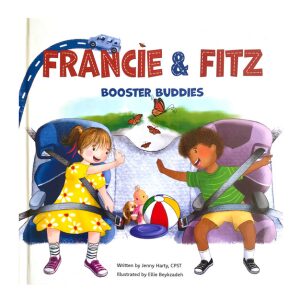
Now Jenny has written a children’s book, Francie & Fitz Booster Buddies, that carries her mission forward, turning an important booster seat safety message into a story children and families can enjoy together. Distributed free of charge at community safety events, the book helps bring this lifesaving message to parents, caregivers, and children.
With Child Passenger Safety Week taking place September 20 – 26 this year, we sat down with Jenny to ask how kids and parents are receiving the book’s safety message.
Montlick: Who are Francie & Fitz, and what do you hope young readers connect with most about them?
Jenny Harty: Francie & Fitz are friends – fun, curious, relatable kids who are learning what it means to ride safely in the car and why a booster seat is so important. I want kids to understand that they have an important role in their own safety. When children understand why a booster seat helps protect them, they can become the greatest advocates in the car. They can speak up, buckle up, and be proud of making the safe choice.
Montlick: What makes a children’s book a powerful way to get across your child passenger safety message?
Jenny: Stories have a way of making information stick. Children remember the characters and the message that they are precious cargo. When a child gets into the car and says, “I need my booster,” the story has moved beyond the pages of a book and into real life. That’s where education can lead to a change in behavior – and can save lives.
I believe we have to start that learning early. If we can help kids understand why riding safely matters and get them invested in making safe choices now, those choices can become habits. Today they’re passengers in the back seat. Before we know it, they’ll be behind the wheel. My hope is that we’re helping create not only safer passengers today, but safer drivers for a lifetime.
Montlick: How do you balance a serious safety message with a story that children can enjoy?
Jenny: That was super important to me. Child passenger safety is serious, but I never wanted the book to feel scary or preachy. Kids don’t need to be frightened into making safe choices. We can teach them in a way that is positive, empowering, and fun. Francie & Fitz get to learn together. They ask questions. They discover why boosters matter. And the message becomes, “Look what I know!” instead of, “Here’s another rule I have to follow.”
That’s the sweet spot — making safety education something kids want to be part of.
Montlick: When reading Francie & Fitz to kids, what are some common reactions from them?
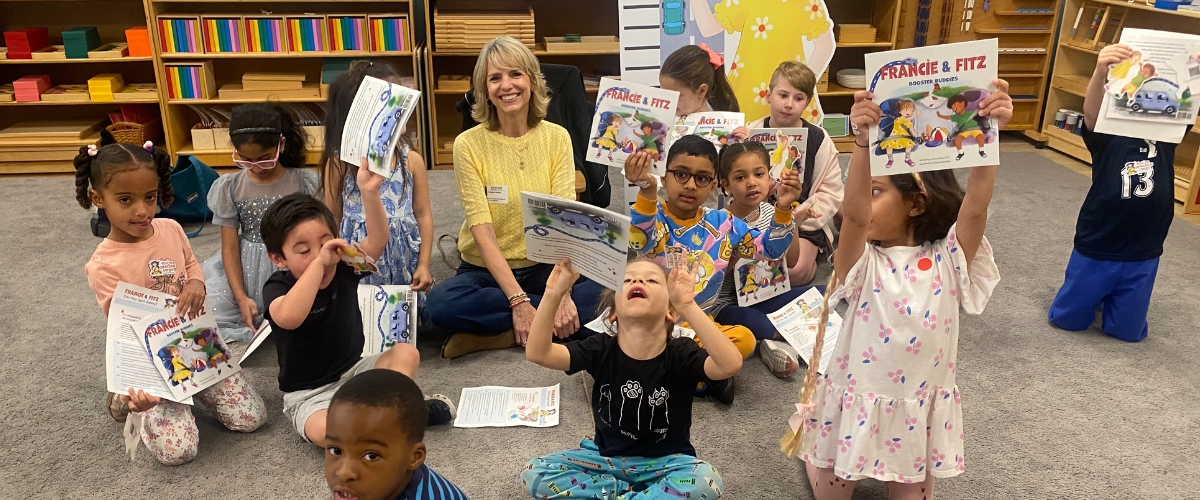
Jenny: I love reading with kids; it’s probably one of my favorite things to do! Kids are incredibly honest. They’ll tell you immediately what kind of seat they ride in, where they sit in the car, whether their brother or sister uses a booster – and sometimes what Mom or Dad does, too!
But what I really love is watching that moment when something clicks (no pun intended…well maybe a little pun intended). You can see it on their faces when they begin to understand why and how a booster helps the seat belt fit their body correctly.
That’s when I know the book is doing exactly what I hoped it would do. They aren’t just listening to a story. They’re thinking about it, talking about it and connecting the dots.
Montlick: How can families use this book as a conversation starter before getting in the car?
Jenny: Keep it simple and make the kids part of the conversation. Ask them, “Why does Francie ride in her booster?” or “What did Fitz learn about the seat belt?” Then, when you get to the car, let them show you what they learned.
Children love being the expert! Giving them that little bit of ownership can turn something that feels like a rule into something they understand and are proud to do.
It also gives parents and caregivers a natural opportunity to talk about safe riding habits without making it feel like a lecture. It becomes part of the family routine: buckle up, ride safely and help everyone get home safely.
Montlick: What do you hope families will do differently after reading the book together?
Jenny: I hope they take another look at how their child is riding. Are they using the right restraint for their age and size? Does the seat belt fit correctly? Is the child restraint installed correctly?
But I also hope families begin talking about safety with their children. Kids are capable of understanding so much more than we sometimes give them credit for. If Francie & Fitz helps one child speak up and say, “Wait! I need my booster,” or helps one parent realize their child should still be riding in one, then we’ve made a difference and we are moving the needle.
This isn’t about selling books. It’s about reaching one more child, starting one more conversation, changing one more behavior – and potentially saving one more life.
Montlick: Why is it so important to reach children with these safety messages while they’re still young?
Jenny: Because the numbers tell us there is still lots of work to do. In 2023, children ages eight to 12 had the highest number of traffic fatalities among children nationally.
That’s why reaching kids early matters. If we can educate and empower kids now, hopefully we can help move the needle, change that statistic and ultimately save more lives.
Montlick: What kind of impact has Francie & Fitz Booster Buddies had in the community?
Jenny: Watching this little book make its way into communities has been incredibly humbling.
Over 12,000 copies of Francie & Fitz have gone into the hands of children and families across the country since publishing in August 2025 – through hospitals, schools, law enforcement agencies, child passenger safety programs, and community organizations. It’s becoming a tool people are using to teach our littlest riders.
Every book represents another opportunity to reach a child and their family. And I know personally just how much that matters. Life can change so quickly. We came incredibly close to losing our little girl, and that experience changed the direction of my life.
When I see these books going into communities, I see opportunities to help keep another child safe and another family from experiencing what ours did, or even worse.
Every single book matters.
Montlick: Where can families learn more about the book and child passenger safety resources?
Jenny: Families can learn more about Francie & Fitz Booster Buddies, find resources for parents and caregivers, and learn more about our mission at FrancieandFitz.com.
I always encourage parents and caregivers who have questions about their child’s car seat or booster seat to seek help from a nationally certified Child Passenger Safety Technician (CPST). Making sure a child is riding in the right seat, the right way, is one of the most important things we can do to help them get home safely.