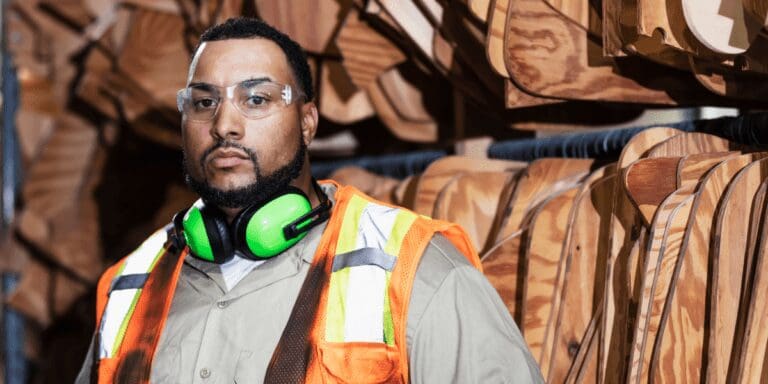
Employee Handbook for Understanding Georgia’s Workers’ Compensation Laws
Employees in the state of Georgia have certain rights when it comes to being injured while on the job.
We have updated our privacy policy. By continuing, you are agreeing to our terms.
Employees in the state of Georgia have certain rights when it comes to being injured while on the job.
According to a recent report, older workers are dying on the job more frequently than all other age demographics even though the overall on-the-job death rates are declining nationwide. Employers must take appropriate measures to protect older employees from health and safety risks that might not necessarily imperil younger workers.

Workers’ compensation insurance is meant to provide support for individuals who suffer work-related injuries. Since workers’ compensation is a no-fault system, employees do not have to prove fault when they have a workers’ compensation claim. However, it is not unusual for claims to be denied by the employer or the insurance company. Insurance companies do not enjoy paying out for claims, and employers do not like the possibility of increasing insurance premiums. If you have filed a claim for workers’ compensation and it was denied, here are some of the reasons that this might have happened.

The good news is, the number of workplace deaths and injuries has declined drastically over the last few decades.

Workers’ compensation programs exist in order to protect workers who are injured on the job.
Workers’ compensation programs are meant to help employees who suffer an injury while they are carrying out their work related duties.
The most recent numbers show that in 2009 there were 3,277,700 recordable, non-fatal accidents in private industry workplaces. Of those, nearly 52 percent involved sprains and strains, most often involving the back, and nearly a million of these injuries caused significant time away from work. If you add bruises, contusions, cuts, lacerations and fractures to the list, you have accounted for almost two-thirds of the accidents which lead to days away from work.

Massachusetts Man Suffers Fatal Head Injuries Following Workplace Accident Workplace accidents happen every day in our country.

Employees can be injured at any time while performing work duties, including while traveling.
Many industries today provide necessary jobs for millions of Americans, but some of those jobs have proven to be dangerous and sometimes fatal for employees and contractors. Such industries include, but are certainly not limited to, mining, construction, law enforcement, agriculture, manufacturing and delivery vehicles.
One of the most important things when it comes to a Georgia workers’ compensation claim is the status of the injured or ill worker at the time the workplace injury or illness occurred. This is often a disputed matter, as some workers are considered “employees,” while other workers are considered “independent contractors.” While an employee’s work status may not seem that important when both an employee and independent contractor may be performing the exact same job duties for the same employer, this distinction is extremely important if an injured or ill worker wants to pursue workers’ compensation benefits.
According to the Occupational Safety and Health Administration, over 4,585 workers were killed on the job in the year 2013.
Many people currently suffer from a lung disease that was caused by a hazardous substance. Such lung diseases can affect the breathing mechanisms causing symptoms such as shortness of breath, chronic cough, chest pain and difficulty breathing. When a person is afflicted with this type of disease in their lungs, they may become incapable of enjoying the activities they once did, or working in the same career field. Occupational lung diseases are brought on by workplace exposure.
Asbestos can cause serious medical conditions that prove to be fatal, such as lung cancer, mesothelioma and asbestoses. These dangerous microscopic fibers pose a significant health hazard to those who engage in electrical work and other construction trades on commercial, public and residential building sites. Asbestos often causes severe illness and wrongful death to those in the building trades because it was a frequent component in construction materials.

The Georgia worker’s compensation system provides a remedy for employees that may include medical, income and permanent disability benefits to those hurt while on the job.

While it may be unnerving to think someone is conducting surveillance of your activities, workers’ compensation insurance companies often use private investigators to monitor the actions of claimants.
Construction projects are often chaotic worksites with many different types of equipment, business entities and dangerous hazards. There are dozens of dangerous hazards that can result in serious injury or even wrongful death on a construction site. One of the most dangerous and diverse types of construction accident hazards are confined spaces.
Many workers end up with what are called repetitive use injuries when required to do jobs such as typing, data processing, continued use of a computer mouse, or repetitive work in a factory like a poultry plant.
The risk to construction workers involved in trenching operations on a construction site where they must work in close proximity to heavy machinery, like an excavator, can result in serious injuries and even fatal excavator accidents. Fatal excavator accidents can be the product of inexperienced or careless operators, or defects in the design of the excavator.

Each year many employees suffer serious injuries on the job that result in the employee needing medical treatment, rehabilitative therapy, and compensation for their lost wages and permanent disability. Under Georgia Workers’ Compensation Law, employees must report the accident to their employer, and are sent by the employer to an approved physician on the employer’s panel. Since the employer determines which doctors are included on the panel, the physician has a potential conflict of interest between the interests of the employee, and interests of the employer who made the referral to the physician. As a result, an employee who is unaware of his or her legal rights may receive much less in the way of medical care and disability benefits, and ultimately a settlement, than someone who consults an attorney. Sometimes, there is even a denial of the claim, resulting in the unfortunate situation where the employee gets no compensation whatsoever.