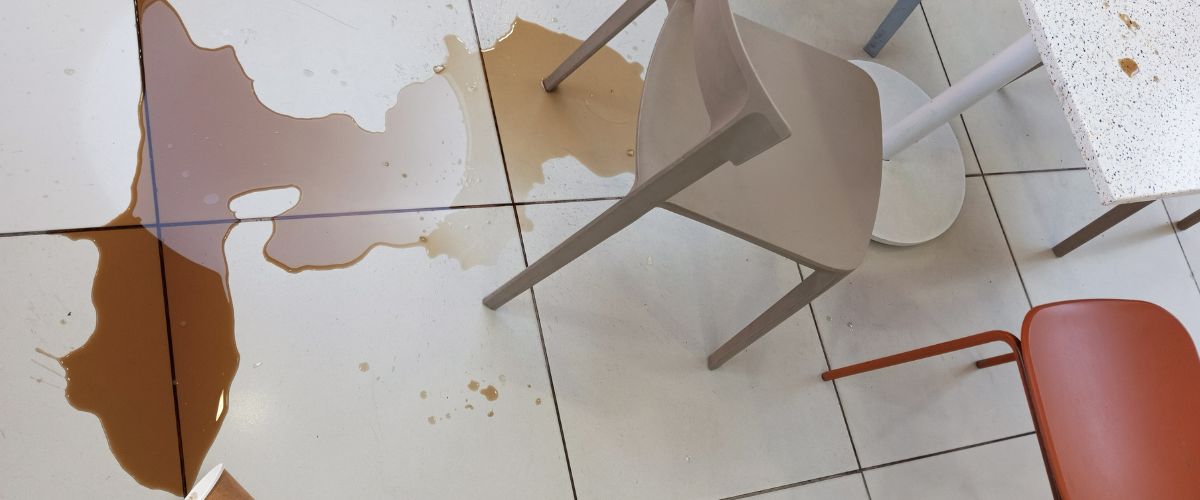
A night out at a restaurant should feel relaxing, celebratory, or simply like a welcome break from the day. But when a spill, grease, wet floor, crowded walkway, or other hazard is not handled with care, that ordinary evening can turn painful and distressing in an instant. A serious fall in a restaurant can leave you facing medical treatment, missed work, unexpected bills, and uncertainty about what to do next. Georgia law may provide a path forward when a restaurant knew, or should have known, about a dangerous condition and failed to take reasonable steps to fix it or warn guests.
If you are a victim of a restaurant slip and fall, and the restaurant knew, or reasonably should have known, about the hazard that caused your fall and failed to fix it or warn you in time, you may be able to pursue compensation for your medical bills, lost wages, and pain and suffering, depending on the facts.
Why Falls Happen So Often in Restaurants
Restaurants operate under circumstances that can make falls more likely than in many other businesses. It can be easy to miss hazards on the floor when navigating a busy, crowded, or dimly lit dining room. Other common restaurant hazards that may lead to falls include:
- Grease and cooking oil can migrate from the kitchen onto dining room floors, especially near swinging doors used by staff.
- Spilled drinks and food are common in high-traffic dining areas and often go unnoticed until someone steps in them.
- Wet floors from mopping or cleaning during business hours, particularly when warning signs are not used or the floor is not allowed to dry.
- Uneven flooring transitions, such as the change from tile to carpet, or a step up to a raised seating area, especially in older or renovated buildings.
- Outdoor patios and entryways exposed to rain, ice, or uneven pavement.
- Restroom floors, which frequently have water on the ground from sinks, hand-drying areas, or mopping.
Who Is Liable for a Fall in a Georgia Restaurant?
As a paying restaurant guest, you are generally considered an invitee under Georgia law. Under O.C.G.A. § 51-3-1, restaurants owe invitees a duty to exercise ordinary care to keep the premises and approaches reasonably safe.
To hold a restaurant liable for your fall, you generally need to establish:
- A hazardous condition existed on the property, such as a spill, grease, wet flooring, or a damaged walking surface.
- The restaurant had actual or constructive knowledge of the hazard. In Georgia premises liability cases, liability often turns on whether the restaurant had superior knowledge of the hazard, meaning the restaurant knew or should have known about a dangerous condition that the injured guest did not know about and could not reasonably avoid.
- You didn’t have equal or greater knowledge of the danger than the restaurant did.
- The hazard directly caused your injury, resulting in actual damages.
“Wet Floor” Signs Don’t Automatically Protect a Restaurant From Liability
Many people assume that if a restaurant puts out a “wet floor” sign or cone, the business can’t be held responsible for a fall, but that’s not necessarily true under Georgia law. Courts have found that simply placing a warning sign doesn’t automatically satisfy a business’s full duty of care.
For example, if a caution sign is easily knocked over by foot traffic, placed somewhere customers are unlikely to see it (such as around a corner or exit from a dark area), or otherwise doesn’t reasonably warn guests of the specific hazard, a restaurant may still be found negligent. Courts look at whether the warning was reasonably sufficient given the circumstances, not just whether a sign existed somewhere in the building.
What Should You Do After a Fall in a Restaurant?
After a restaurant fall, try to document what happened as soon as possible. Report the fall to a manager and ask whether an incident report can be completed. Take photos or videos of the hazard, your shoes, the surrounding area, lighting conditions, and any warning signs. Get the names and contact information of anyone who saw what happened.
You should also seek medical attention if you are hurt or if symptoms develop later. Save any receipts, medical records, photos, or other documents related to the fall. If you receive a call from an insurance company or other party, avoid giving any recorded statement before you understand your rights.
How Different Injuries Can Affect Your Claim
Not every restaurant fall leads to the same legal process. The severity and type of injury you sustain often shapes what you should do next.
Minor Injuries
If your symptoms seem minor at first, it is still important to document what happened (photos, an incident report, witness names) and pay attention to how you feel in the hours and days that follow. Some injuries become more noticeable later, and getting medical guidance can help protect both your health and the record of what happened.
Moderate Injuries
If you suffer a fracture, a concussion, or an injury that requires ongoing treatment, physical therapy, or time off work, the stakes change quickly. These injuries often come with mounting medical bills and lost income, and insurance companies tend to fight harder against claims with higher dollar amounts attached. At this point, it may be helpful to speak with a Georgia slip-and-fall attorney, especially because evidence like surveillance footage and inspection logs can disappear within days or weeks.
Severe or Long-Term Injuries
For serious or long-term injuries, it is especially important to speak with an attorney promptly, given how much is at stake and how aggressively insurers tend to respond to high-value claims. A lawyer can help you navigate the process, obtain evidence, keep to filing deadlines, and push back on insurance tactics.
What Happens If You Are Partly to Blame for the Fall?
Georgia follows a modified comparative negligence rule under O.C.G.A. § 51-12-33. Even if you were partly at fault for your fall, such as not noticing a spill because you were looking at your phone, you can still recover compensation as long as you’re found less than 50% responsible for the injury or damage, although your compensation will be reduced by your percentage of fault.
If you’re found to be 50% or more at fault, however, Georgia law prevents you from recovering anything. Restaurants and insurers may look closely at whether you could have seen or avoided the hazard, so it can be important to understand how Georgia’s comparative negligence rule may apply.
How Much Is a Restaurant Slip-and-Fall Claim Worth?
The value of your claim depends on many factors, and there’s no online calculator or flat formula that can give you an accurate number. The best way to understand the potential value of a claim is through a case-specific evaluation by an attorney.
Economic vs. Non-Economic Damages
Insurance companies and attorneys often start by looking at your economic damages, meaning your actual medical bills, lost wages, and other quantifiable costs, and then factor in non-economic damages like pain and suffering, which are harder to put a number on. Some insurers may use internal formulas or ranges when evaluating pain and suffering, but those approaches do not determine what a claim is worth. The facts, evidence, injuries, available insurance, and applicable law matter.
Insurance Policy Limits
Your compensation can also be limited by the restaurant’s insurance policy limits. Even if a jury awards damages beyond what the policy covers, collecting the full amount can become more complicated. A personal injury attorney can help determine whether other insurance policies or defendants might be available to pursue.
Some other factors your compensation may depend on include:
- The severity and permanence of your injuries
- Lost wages and diminished earning capacity
- Whether you share any percentage of fault
- The quality of available evidence, such as video footage, witness statements, and incident reports
How Long Do You Have to File a Restaurant Slip-and-Fall Lawsuit in Georgia?
Georgia’s statute of limitations for most personal injury lawsuits, including restaurant slip-and-fall cases, is generally two years from the date of the fall. Missing this deadline typically means losing your right to pursue compensation, no matter how strong your case may be.
Some circumstances can shorten or extend this window, such as claims involving a minor, or claims against government-owned property. Because these exceptions are easy to overlook, it’s best to speak with an attorney as soon as possible after your fall.
Restaurant Slip-and-Fall Claims Deserve Careful Review
Restaurant fall claims often turn on details that are easy to miss in the moment: what caused the fall, how long the hazard existed, whether employees knew about it, whether warning signs were adequate, and what evidence is available. Because surveillance footage, incident reports, cleaning logs, and witness information may become harder to obtain over time, it can be important to understand your options soon after the fall.
If you were injured in a restaurant or another premises liability accident, Montlick Injury Attorneys offers free case evaluations to help you understand your options and decide what steps may make sense for your situation.
Your Questions Answered
Do I need to report the fall to the restaurant to have a valid claim?
No, but reporting the fall can help. An incident report creates a timely record of what happened. If you did not report the fall at the time, you may still be able to pursue a claim, but gathering supporting evidence later may be more difficult.
What if the restaurant says the floor sign was clearly visible?
That’s a factual dispute courts and insurers will evaluate closely. Even a visible sign may not be enough if it wasn’t placed appropriately for the specific hazard, or if the restaurant otherwise failed to act with reasonable care.
What if I fell in the restaurant’s parking lot instead of inside?
Parking lot falls are generally treated as premises liability claims as well, though liability sometimes depends on who is responsible for maintaining the lot (the restaurant, a landlord, or a separate property management company).