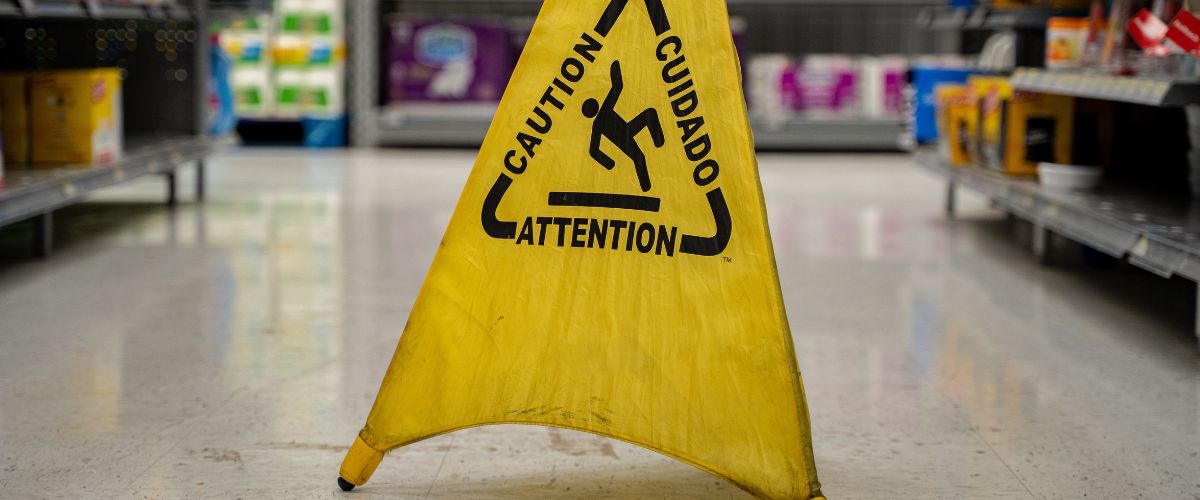
A fall in a supermarket can happen suddenly. One moment you are walking through the produce aisle; the next, you may be on the floor dealing with pain, confusion, and questions about what caused the fall.
If you slip and fall in a Georgia supermarket, you may be able to pursue a premises liability claim if evidence shows the store knew, or reasonably should have known, about the hazard and failed to fix it or warn shoppers.
Why Falls Happen in Supermarkets
Supermarkets are busy, constantly changing environments. Employees may be restocking shelves and moving carts and pallets throughout the day. At the same time, shoppers are often focused on shelves, displays, and shopping lists rather than the floor.
Some common hazards in supermarkets include:
- Wet produce sections, including misting systems or stray produce on the floor
- Condensation or leaks near freezers and refrigerated aisles
- Spills from broken containers or dropped products
- Grease, crumbs, or food debris near deli and bakery areas
- Pallet jacks, stocking carts, boxes, or merchandise left in walkways
- Torn mats, uneven flooring, or cluttered entryways
Who Is Liable for a Slip and Fall in a Supermarket?
Slip-and-fall claims in Georgia fall under premises liability law. Under O.C.G.A.§ 51-3-1, a property owner or occupier (including a store that leases its space) owes a duty to exercise ordinary care in keeping the premises and approaches safe for customers who are lawfully on the property.
A supermarket fall claim often depends on evidence showing that:
- A hazardous condition existed, such as a spill, wet floor, debris, torn mat, or unsafe walkway.
- The store had actual knowledge of the hazard, or constructive knowledge because it existed long enough that reasonable inspection procedures should have discovered it.
- You did not have equal or greater knowledge of the hazard.
- The hazard caused your injury and you suffered damages, such as medical bills, lost income, or pain and suffering.
Supermarket fall cases can be challenging because it is not enough to show that a hazard existed; the evidence also needs to show that the store knew or reasonably should have known about it before the fall.
Did the Store Have Knowledge of the Hazard?
This question is often central to supermarket slip-and-fall cases. Knowledge generally comes as either actual notice (an employee saw or was told about the hazard) or constructive notice (the hazard sat long enough that a diligent store should have caught it).
Most cases hinge on the second type of knowledge. A puddle that formed seconds before a fall is a harder case to prove. A spill with dirty footprints or a “dried edge” is much stronger evidence the store should have caught it. Georgia courts often look closely at how long the hazard existed, whether employees were nearby, what inspection procedures were in place, and whether those procedures were reasonable under the circumstances.
What If the Store Says You Were Partly at Fault?
A store may argue that you were partly responsible for the fall, such as by not noticing a visible hazard or failing to use reasonable care. Under Georgia’s modified comparative negligence rule O.C.G.A. § 51-12-33, your recovery may be reduced if you are found partly at fault. If you are found 50% or more at fault, Georgia law generally bars you from recovering damages.
How Long Do You Have to File a Supermarket Fall Lawsuit in Georgia?
In many Georgia personal injury cases, you generally have two years from the date of the fall to file a lawsuit under O.C.G.A. § 9-3-33. Some exceptions and notice requirements that shorten the timeline may apply, so it is important to speak with an attorney about the deadline that applies to your situation.
What to Do Immediately After a Fall in a Supermarket
The steps you take in the minutes and days after a fall can help preserve important information. Documentation and accurate reporting may make it easier to understand what happened later.
Report the fall to store management
Ask that an official incident report be created, and request a copy if the store will provide one.
Take photos and videos
Photograph the hazard, the surrounding area, any visible injuries, warning signs, and the shoes you were wearing. Also try to note or document:
- the exact aisle or location
- the time of the fall
- nearby employees
- lighting conditions
- whether warning signs were present
- what you saw on the floor
Ask whether surveillance footage exists and request that it be preserved, because store video may be erased or overwritten within days or weeks.
Get witness information
If anyone saw you fall, ask for their name and contact information. Employee witnesses can be especially useful if they saw the hazard, knew how long it had been there, or were involved in cleaning or inspecting the area.
Get medical attention
Even if you feel “okay” at the moment, some injuries (particularly head injuries and back injuries) don’t show symptoms right away. A medical record created close to the time of the fall also helps connect your injury to the incident.
Save any documentation
Keep receipts, medical records, discharge papers, and communications from the store or insurer. Save the shoes you were wearing at the time of the fall. In a disputed case, footwear may become evidence, especially if the store argues your shoes contributed to the fall.
Be cautious with the store’s insurance company
Store representatives or their insurer may contact you quickly, asking for a recorded statement or offering a fast settlement. Before giving a recorded statement or signing documents, consider speaking with an attorney so you understand how your statement may affect your claim.
Speak With a Georgia Slip-and-Fall Attorney About Your Options
After a supermarket fall, it can be difficult to know what information matters or what steps to take next. Evidence such as surveillance footage, incident reports, cleaning schedules, and witness statements may play an important role in determining whether the store failed to use reasonable care. If you have questions after a fall in a Georgia supermarket, a free consultation with a Montlick attorney can help you understand how Georgia premises liability law may apply to your case.
Frequently Asked Questions
Do I need to report the fall to the store?
An incident report isn’t strictly required to pursue a claim, but it creates a timely record of what happened and can be valuable evidence. If you fell and didn’t report it at the time, you can still pursue a claim, but it may take more work to establish the facts.
What if there was a “wet floor” sign present?
A wet floor sign doesn’t automatically protect a store from liability. Courts look at whether the sign was placed appropriately, visible, and whether the store otherwise acted reasonably given the hazard. If a sign was poorly placed, knocked over, or insufficient to warn of the actual danger, the store may still be liable.
Can I still recover compensation if I wasn’t paying close attention?
Possibly. Georgia’s comparative negligence rule allows you to recover compensation as long as you’re found less than 50% at fault for your injuries, though your recovery will be reduced by your percentage of fault.
What if the spill was caused by another customer, not an employee?
The store can still be liable if an employee knew about the spill (or should have discovered it through reasonable floor checks) and failed to clean it up or warn customers in time.
What if I work at the supermarket?
If you slipped and fell while working at a supermarket, your claim may be handled through a Georgia workers’ compensation claim rather than a premises liability claim against your employer. In some situations, a third-party claim may also be possible if someone other than your employer contributed to the hazard. Workers’ compensation rules are different from customer injury claims, so employees should speak with an attorney about which path may apply.