We have updated our privacy policy. By continuing, you are agreeing to our terms.

Injured on or by a Golf Cart? What To Do Next

How we move around our cities and towns is changing rapidly. In the space of a few years, we’ve seen considerable growth in the types of vehicles navigating our streets. At the same time, however, rider and pedestrian injury cases have risen, especially ones involving golf carts.

Montlick Author Avatar for Article By Montlick Content Team
Legally Reviewed By: Kathryn Cozzo Patterson, Esq.
Do I Have a Case?

Related Pages

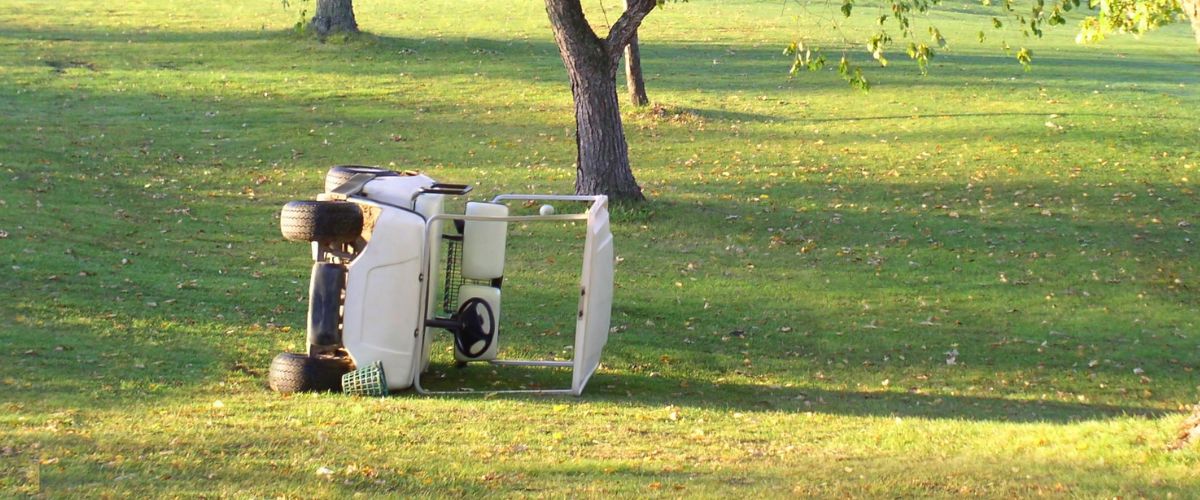
a golf cart on its side after a golf cart accident

Peachtree City remains Georgia’s best known golf cart community, yet these vehicles are now a common sight in many suburban areas throughout the state, where residents appreciate the relaxed open-air riding experience.

However, as golf carts trade freshly-cut greens for city streets and paths, they bring new risks- for drivers, passengers, and pedestrians. Although the open-air ride is welcome on beautiful Georgia days, it brings new safety challenges- and sometimes, serious injuries. Golf cart crashes can also create tremendous amounts of confusion as drivers, insurance companies, and cart manufacturers catch up to their new place in our traffic mix.

If you’ve been injured while driving, riding in, or struck by a golf cart, you don’t have to navigate the aftermath alone. Understanding how these accidents happen, who may be responsible, and what your legal options are can help you pursue the compensation you deserve. Here’s what you need to know to protect yourself.

Types of Golf Cart Accidents

Single-Cart Accidents

Single cart crashes involve just one golf cart and can happen on a golf course, a private residence, or a public road. These cases can often be complex. Contributing factors may include dangerous driving, intoxication, mechanical failure, or unsafe terrain. A seasoned golf cart accident attorney will investigate all possible causes to determine if the cause of the accident was you or something beyond your control.

Golf Cart Hit By A Car

Another type of golf cart accident occurs when a motor vehicle, truck, or bus collides with a golf cart. Golf cart drivers are subject to the same risks and hazards as any other motor vehicle that rides on the roads in Georgia. Cars may strike golf carts at intersections, crossings, and even within parking lots. But just because a car and golf cart collides, doesn’t mean it’s always the car driver’s fault.

When there’s a collision involving a golf cart and a car, there are a host of Georgia laws and local ordinances that may come into play and help establish who bears liability for the accident. In some cases, it may be that both drivers share some degree of responsibility. That’s why having trusted golf cart accident lawyers can make a difference. They can help fight back against insurance companies who may attempt to shift all the blame onto one party.

Bicyclist Hit by a Golf Cart

Golf carts and bicycles often use the same paths and roadways. GA Code § 40-6-331 allows local government authorities to designate certain pathways just for personal transportation vehicles like golf carts. These paths can attract cyclists who view them as a safer alternative to busy city streets. By the same token, golf carts may choose to drive on a bicycle path for the same reason.

Pedestrian Golf Cart Collisions

Golf carts now appear in areas where pedestrians don’t typically expect motorized traffic like sidewalks, parks, festivals, and job-sites.

Collisions involving a pedestrian and a golf cart can create a host of injuries for pedestrians and golf cart occupants. Many golf carts are designed to travel at speeds less than 20 to 25 mph. However, vehicles traveling at those speeds still pose a serious risk to pedestrians who aren’t afforded the protections that those inside the vehicle may enjoy. If you’re a pedestrian suffering from a golf cart injury, speak with seasoned pedestrian attorneys who understand your pain.

A Golf Cart Injury Is More Common Than You Think

When we think about motor vehicle collisions and injuries, we don’t often think about golf carts because of their association with idyllic green spaces and a slower pace. However, since the early 2000s researchers have been tracking the rates of golf cart injuries in the United States.

In one of the earlier studies, from 2008, the researchers found that emergency departments across the US treated roughly 147,696 patients for golf cart related injuries between 1990 and 2006. A follow up study conducted in 2020, analyzing the 10-year span from 2007 to 2017, found there were 156,040 patients treated in emergency departments at that time. The data show that the golf cart injury rate jumped from a rate of 9,231 injuries per year between 1990-2006 to 15,604 per year between 2007 and 2017.

The 2020 study also found a clear rising trend in golf cart injuries for seniors, as they’ve become a common sight in many senior-living communities. Meanwhile, a study from the American Association of Pediatrics found a steady rise in golf cart injuries to children from 2010 to 2019.

Why Golf Carts Can Be Dangerous

One reason cited for the rise in injuries is the growing legality of golf carts beyond the golf course coupled with stagnant safety features. Researchers have flagged a reliance on safety features that haven’t kept up with the growing rise in golf cart popularity. In other words, what may have kept someone safe while slowly driving around a golf course may not be reasonably safe for roads, parking lots, and designated pathways. And while golf carts are becoming more common on roadways, that doesn’t mean drivers are fully aware of their presence in the same way they are of other cars.

  • Open Design: Some elements of golf cart design increase the risk of certain types of injuries. One obvious source is the open air design. Unlike cars, there are no doors and windows keeping passengers within the vehicle. Unsurprisingly, falling or jumping from the golf cart accounts for nearly half of all golf cart injuries.
  • Safety Features: Some of the safety features of golf carts may not be sufficient for all the intended passengers. Researchers believe that the hip restraints and handles are ineffective in keeping children on the vehicle, making them 40% more likely to fall from the golf cart compared to adults.
  • Inexperienced Golf Cart Drivers: Inexperience is a two-way street. Some Georgia municipalities still allow unlicensed individuals to drive golf carts under grandfathered laws, which could potentially put inexperienced drivers behind the wheel of a golf cart.
  • Vehicle Interaction: Drivers of cars and trucks may underestimate golf cart speed or visibility, potentially leading to serious collisions.

Who Can Be Held Liable?

Consider this scenario: A guest attending an event at a golf course is offered a ride by hired staff. The staff don’t work for the course but a different company and it’s their first time working at this location. Before the guest has a chance to put on their seatbelt, the staff member zips down a path at the course. They unfortunately don’t realize there’s a large pothole on this path and weren’t warned by the golf course. The cart hits the pothole, sending the tail of the cart into the air and ejecting the guest from the rear facing seat causing injuries. Who is liable?

Getting to the answer is at the heart of what a golf cart accident attorney does. They’ll investigate the driver, employers, property owner, and even the golf cart manufacturer themselves. It may also be the case that a combination of these actors share responsibility for the injuries they caused. Additionally, the injured victim may have contributed in some way to the accident occurring. Often, these victims may feel scared into silence about their injuries or insurance companies may bully them into low-ball settlements because they share responsibility.

However, GA Code § 51-12-33 provides that if you were less than 50% at fault for the accident you can still potentially recover damages for your injuries, but those damages may be reduced based on your percentage of fault for the accident. Before an insurer attempts to pressure you into a settlement or deny a claim altogether, call an experienced golf cart accident attorney to learn what options you may have.

Drivers Can Be Liable

As in car accident claims, a driver may be a cause or the sole source of liability in a golf cart accident. Holding drivers accountable for the accidents they cause often involves an investigation into whether their driving was reasonable given the circumstances. Going dangerously fast or making sudden and reckless maneuvers may be considered unreasonable whether they’re performed by car drivers or golf cart operators.

An Employer May Share Responsibility

As golf carts become an integral part of workplaces that require staff to move about a wide area at speed, it adds potential sources of liability. If a person is injured because of the actions of an employee, the employer can be held liable. GA Code § 51-2-2 holds employers liable for the conduct of their employees when they engage in tasks their employer directs them to do or are within their employer’s business. This might apply during an event where staff use golf carts to move around, or a stadium with carts crossing around parking lots and interior halls.

Property Owner Liability for Golf Cart Injury

Similar to employers, property owners have certain responsibilities for maintaining safe environments. When they fail to perform these responsibilities with the care required, they may be held responsible for accidents and injuries under a theory known as premises liability. For example, a golf course owner must clear hazards from golf cart paths or warn golfers of them in advance. If they fail to do so and a golfer is injured in a golf cart accident, the course owner may be held liable.

Golf Cart Manufacturers May be Responsible

An additional source of liability that may be present in golf cart accidents are the manufacturers of the golf carts themselves. If a golf cart’s design is defective or lacks critical safety features, the manufacturer may be responsible under product liability laws.

Experts have recommended improvements to golf carts including three-point seatbelts like in cars, center hand holds, and a higher hip restraint to prevent passengers of all ages from falling out of carts, but many models lack these upgrades.

What to Do After a Golf Cart Accident

If you’ve been injured in a golf cart accident, your first concern should be your health. Calling 911 for first responders provides the best chance of identifying potential injuries and getting to a hospital for fast treatment. Even if you and the others involved feel fine at first, there may be injuries lurking beneath the surface.

Your call to emergency medical services should also include a call to the police to report the accident. A police report provides vital objective documentation regarding the accident that can validate your recollection of events. It may also be required after certain accidents in Georgia.

If you’re able to, you can also start documenting the scene as you await paramedics and police. Taking pictures and videos of the accident scene, including the vehicles and road can help recreate the specifics of what happened. It is also important to speak with eyewitnesses and obtain their contact information in case their testimony is needed later. Once you’re in a stable condition, a call to trusted golf cart accident lawyers can help you plan your next steps.

How Our Golf Cart Accident Attorneys Build a Strong Golf Cart Injury Case

Long before a golf cart injury lawsuit goes to trial, a golf cart accident lawyer from Montlick will begin building a case to substantiate their client’s claims. Early legal intervention is essential, especially if insurance companies are pressuring you to settle.

Here’s how we help secure maximum compensation possible for our clients.

  • Gather Evidence: In some golf cart accidents there may be surveillance footage and maintenance records that can establish liability. Other evidence from the accident scene, including eyewitness statements can help recreate the accident and show who’s to blame.
  • Investigate Ownership: Questions of liability might come down to who owns what. Property owners, golf cart and vehicle owners, and employers all need to be identified.
  • Find the Right Insurer: Armed with the ownership information, the golf cart accident attorney can determine which insurers to file claims with and for what. There may be competing limits on policies that can provide better pathways to full compensation.
  • Calculate Damages: One stressful task for injured victims when filing a claim is calculating and documenting their damages. Having an experienced attorney by your side to do this work for you can reduce stress and keep the focus on healing.
  • Find Applicable Statutes: Golf carts are subject to state statutes and local ordinances in Georgia. If owners or operators of a cart violated certain laws, it could help determine who bears responsibility.

A Golf Cart Injury Deserves Fair Compensation

If you’re suffering from a golf cart injury you don’t have to let confusion and pain keep you from the compensation you deserve. Call Montlick to get connected with experienced golf cart accident attorneys who listen, empathize, and strategize for their clients. We pursue justice for our clients with purpose, passion, and persistence. Contact us today for a free consultation regarding your claim.

Injured on or by a Golf Cart? What To Do Next

If you were injured on or by a golf cart, compensation may be available. Call Montlick for a free consultation with an experienced golf cart accident lawyer.

Montlick Author Avatar for Article By jorge
Do I Have a Case?

Related Pages

two-male-golfers_171337-6559

Although Peachtree City is the most famous example of a Georgia golf cart community, use of these vehicles is increasingly being adopted by suburbanites throughout the state, attracted by the casual, open-air experience the ride offers.

But as golf carts trade freshly-cut greens for city streets, they can lead to injuries for drivers, passengers, and others on the road. Although the open-air ride is welcome on beautiful Georgia days, it increases the opportunities for pedestrian and motor vehicle collisions. These crashes can also create tremendous amounts of confusion as drivers, insurance companies, and golf cart manufacturers catch up to their new place in our traffic mix.

If you’ve been the victim of a golf cart injury, you don’t have to let this confusion keep you from the compensation you deserve. Below, we detail some of the types of golf cart accidents, the injuries they cause, and why they happen. We also outline how innocent victims can benefit from the assistance of legal representation.

Types of Golf Cart Accidents

Single-Cart Accidents

A single-cart accident refers to a situation where only one cart is involved in the accident, rather than a collision with another vehicle or pedestrian. That doesn’t mean these are less complex accidents, however. First, this type of accident can occur anywhere, on the golf course, road, or even at a family house. Also, there may be one single reason or various causes that contribute to a single cart accident.

A driver may have been intoxicated or driving dangerously which led to the accident. Or, there may have been unsafe terrain that led to an accident. A seasoned golf cart accident attorney will investigate these sources among others to determine what caused a single cart accident.

Golf Cart Hit by a Car

Another type of golf cart accident occurs when a motor vehicle, truck, or bus collides with a golf cart. Golf cart drivers are subject to the same risks and hazards as any other motor vehicle that hits the roads in Georgia. Cars may strike golf carts at intersections, crossings, and even within parking lots. But just because a car and golf cart collides, that doesn’t mean it’s always that car driver’s fault.

When there’s a collision involving golf carts and cars, there are a host of Georgia laws and local ordinances that may come into play and help establish who bears liability for the accident. In some cases, it may be that both drivers share some degree of responsibility. That’s why having trusted golf cart accident lawyers can make a difference. They can help fight back against insurance companies who may attempt to shift all the blame onto one party.

Bicyclist Hit by Golf Carts

Bicyclists and golf carts often compete for some of the same paths and roadways. GA Code § 40-6-331 allows local government authorities to designate certain pathways just for personal transportation vehicles like golf carts. These paths can attract cyclists who view them as a safer alternative to busy city streets.

Pedestrian Golf Cart Collisions

Pedestrians are taught to approach intersections and crossings with care and caution. Understandably so, since these areas put them in the direct path of fast moving vehicles. But many of us consider walking on the sidewalk, through our worksite, or at an event to be devoid of the dangers of motor vehicles. But as golf carts make their way into more areas, it increases the risk of golf carts striking pedestrians.

These collisions can create a host of injuries for pedestrians and golf cart occupants. Many golf carts are designed to travel at speeds less than 20 to 25 mph. However, vehicles traveling at those speeds still pose a serious risk to pedestrians who aren’t afforded the protections that those inside the vehicle may enjoy. If you’re a pedestrian suffering from a golf cart injury, speak with seasoned pedestrian attorneys who understand your pain.

A Golf Cart Injury Is More Common Than You Think

When we think about motor vehicle collisions and injuries, we don’t often think about golf carts because of their association with idyllic green spaces and a slower pace. However, since the early 2000s researchers have been tracking the rates of golf cart injuries in the United States.

In one of the earlier studies, from 2008, researchers found that emergency departments across the US treated roughly 147,696 patients for golf cart related injuries between 1990 and 2006. A follow up study conducted in 2020, analyzing the 10-year span from 2007 to 2017, found there were 156,040 patients treated in emergency departments at that time. The data show that the golf cart injury rate jumped from a rate of 9,231 injuries per year between 1990-2006 to 15,604 per year between 2007 and 2017.

The 2020 study also found a clear rising trend in golf cart injuries for seniors, as they’ve become a common sight in many senior-living communities. Meanwhile, a study from the American Association of Pediatrics found a steady rise in golf cart injuries to children from 2010 to 2019.

Why Are Golf Carts Dangerous?

One reason cited for the rise in injuries is the growing use of golf carts beyond courses, coupled with stagnant safety features. Researchers have found that many golf carts are still being used with old safety features that were designed for golf courses, not for today’s wider use. The protection that’s sufficient for a leisurely drive across a grassy fairway is often not enough to keep someone safe on busier roads, parking lots, and neighborhood paths. And while golf carts are becoming more common on roadways, that doesn’t mean drivers are fully aware of their presence in the same way they are other cars.

  • Design: Some elements of golf cart design increase the risk of certain types of injuries. One obvious source is the open air design. Unlike cars, there are no doors and windows keeping passengers within the vehicle. Unsurprisingly, falling or jumping from the golf cart accounts for nearly half of all golf cart injuries.
  • Safety Features: Some of the safety features of golf carts may not be sufficient for all the intended passengers. Researchers believe that the hip restraints and handles are ineffective in keeping children on the vehicle, making them 40% more likely to fall from the golf cart compared to adults.
  • Inexperienced Golf Cart Drivers: Inexperience is a two-way street. First, if a Georgia municipality had a law allowing unlicensed drivers to operate golf carts prior to January 1, 2012, those laws are still in effect. That could potentially put inexperienced drivers behind the wheel of a golf cart.
  • Inexperienced Car Drivers: On the other hand, drivers of cars and trucks may not know how to approach golf carts on the roads, they may inaccurately judge how long it takes them to cross a street or make a turn, leading to accidents.

Who Can Be Held Liable?

Consider this scenario: A guest attending an event at a golf course is offered a ride by hired staff. The staff don’t work for the course but a different company and it’s their first time working at this location. Before the guest has a chance to put on their seatbelt, the staff member zips down a path at the course. They unfortunately don’t realize there’s a large pothole on this path and weren’t warned by the golf course. The cart hits the pothole, sending the tail of the cart into the air and ejecting the guest from the rear facing seat, causing injuries. Who is liable?

Getting to the answer is at the heart of what a golf cart accident attorney does. They’ll investigate the driver, employers, property owner, and even the golf cart manufacturer themselves. It may also be the case that a combination of these actors share responsibility for the injuries they caused. Or, the injured victim may have contributed in some way to the accident occurring. Often, these victims may feel scared into silence about their injuries or insurance companies may bully them into low-ball settlements because they share responsibility.

However, GA Code § 51-12-33 provides you can still recover compensation for your damages if you were less than 50% at fault. The amount of compensation will be reduced by the victim’s share of liability, but this still provides crucial compensation. Before an insurer attempts to pressure you into a settlement or deny a claim altogether, call an experienced golf cart accident attorney to learn what options you may have.

Drivers Can Be Liable

As in car accident claims, a driver may be a cause or the sole source of liability in an accident. Holding drivers accountable for the accidents they cause often involves an investigation into whether their driving was reasonable given the circumstances. Going dangerously fast or making sudden and reckless maneuvers may be considered unreasonable whether they’re performed by car drivers or golf cart operators.

An Employer May Share Responsibility

When golf carts are used for transportation at large workplaces, they introduce new potential risks and legal responsibilities for the company. If a person is injured because of the actions of an employee, the employer can be held liable. GA Code § 51-2-2 holds employers liable for the conduct of their employees when they engage in tasks their employer directs them to do or are within their employer’s business. This might apply during an event where staff use golf carts to move around, or a stadium with carts crossing parking lots and interior halls.

Property Owner Liability for Golf Cart Injury

Similar to employers, property owners have certain responsibilities regarding the maintenance of their premises. When they fail to perform these responsibilities with the care required, they may be held responsible for accidents and injuries under a theory known as premise’s liability. For example, a golf course owner must clear hazards from golf cart paths or warn golfers of them in advance. If they fail to do these and a golfer is injured in a golf cart accident, the course owner could be held liable.

Golf Cart Manufacturers May be Responsible

An additional source of liability that may be present in golf cart accidents are the manufacturers of the golf carts themselves. Holding manufacturers responsible for their accidents caused by their products is known as products liability. In the case of a golf cart injury lawsuit, it may be that the design of the golf cart itself is defective.

Researchers have recommended changes to golf carts including three-point seatbelts like in cars, center hand holds, and a higher hip restraint to prevent passengers of all ages from falling out of carts. However, these recommendations have not been implemented, perhaps indicating manufacturer responsibility.

What to Do After a Golf Cart Accident

If you’ve been injured in a golf cart accident, your first concern should be your health. Calling for first responders provides the best chance of identifying potential injuries and getting to a hospital for fast treatment. Even if you and the others involved feel fine at first, there may be injuries lurking beneath the surface.

Your call to emergency medical services should also include a request for police to visit the scene. A police report provides vital objective documentation regarding the accident that can validate your recollection of events. It may also be required after certain accidents in Georgia.

If you’re able to, you should take pictures and videos of the accident scene, including the vehicles and road can help recreate the specifics of what happened. You can also speak with eyewitnesses and obtain their contact information in case their testimony is needed later. Once you’re in a stable condition, a call to trusted golf cart accident lawyers can help you plan your next steps.

How Our Golf Cart Accident Attorneys Build a Case For Compensation

When a client sustains a golf cart related injury, a Montlick attorney will immediately begin building a case to substantiate their client’s claims. It’s essential that this work begins early because insurance companies may push an innocent victim into a settlement that minimizes or fails to acknowledge the extent of the harm.

To push back against insurance intransigence, a seasoned attorney knows they need an ironclad combination of facts and law at their disposal. After consulting with their clients, Montlick attorneys start building a case to secure maximum compensation for their clients.

  • Gather Evidence: In some golf cart accidents there may be surveillance footage and maintenance records that can establish liability. Other evidence from the accident scene, including eyewitness statements, can help recreate the accident and show who’s to blame.
  • Investigate Ownership: Questions of liability might come down to who owns what. Property owners, golf cart and vehicle owners, and employers all need to be identified.
  • Find the Right Insurer: Armed with the ownership information, the golf cart accident attorney can determine which insurers to file claims with and for what. There may be competing limits on policies that can provide better pathways to full compensation.
  • Calculate Damages: One stressful task for injured victims when filing a claim is calculating and documenting their damages. Having an experienced attorney by your side to do this work for you can reduce stress and keep your focus on healing.
  • Find Applicable Statutes: Golf carts are subject to state statutes and local ordinances in Georgia. If owners or operators of a cart violated certain laws, it could help determine who bears responsibility.

A Golf Cart Injury Deserves Fair Compensation

If you’re suffering from a golf cart injury you don’t have to let confusion and pain keep you from the compensation you deserve. Call Montlick to get connected with experienced golf cart accident attorneys who listen, empathize, and strategize for their clients. We pursue justice for our clients with purpose, passion, and persistence. Contact us today for a free consultation regarding your claim.