
Broken limbs are common injuries after many types of accidents, including slip and falls, car crashes, motorcycle accidents, and truck accidents. At first, a fracture may sound straightforward compared to other injuries, but the physical, financial, and long-term impact can be significant. Medical bills, follow-up care, time away from work, transportation challenges, and daily limitations can add up quickly, even when someone has health insurance.
Looking at the typical costs connected to a broken leg can help show why a personal injury claim may matter. For many injured people, these expenses arrive while they are already trying to manage pain, missed income, insurance pressure, and uncertainty about what comes next. Clear legal guidance can help them understand what costs may be part of a claim and what options may be available.
Medical Treatment Costs
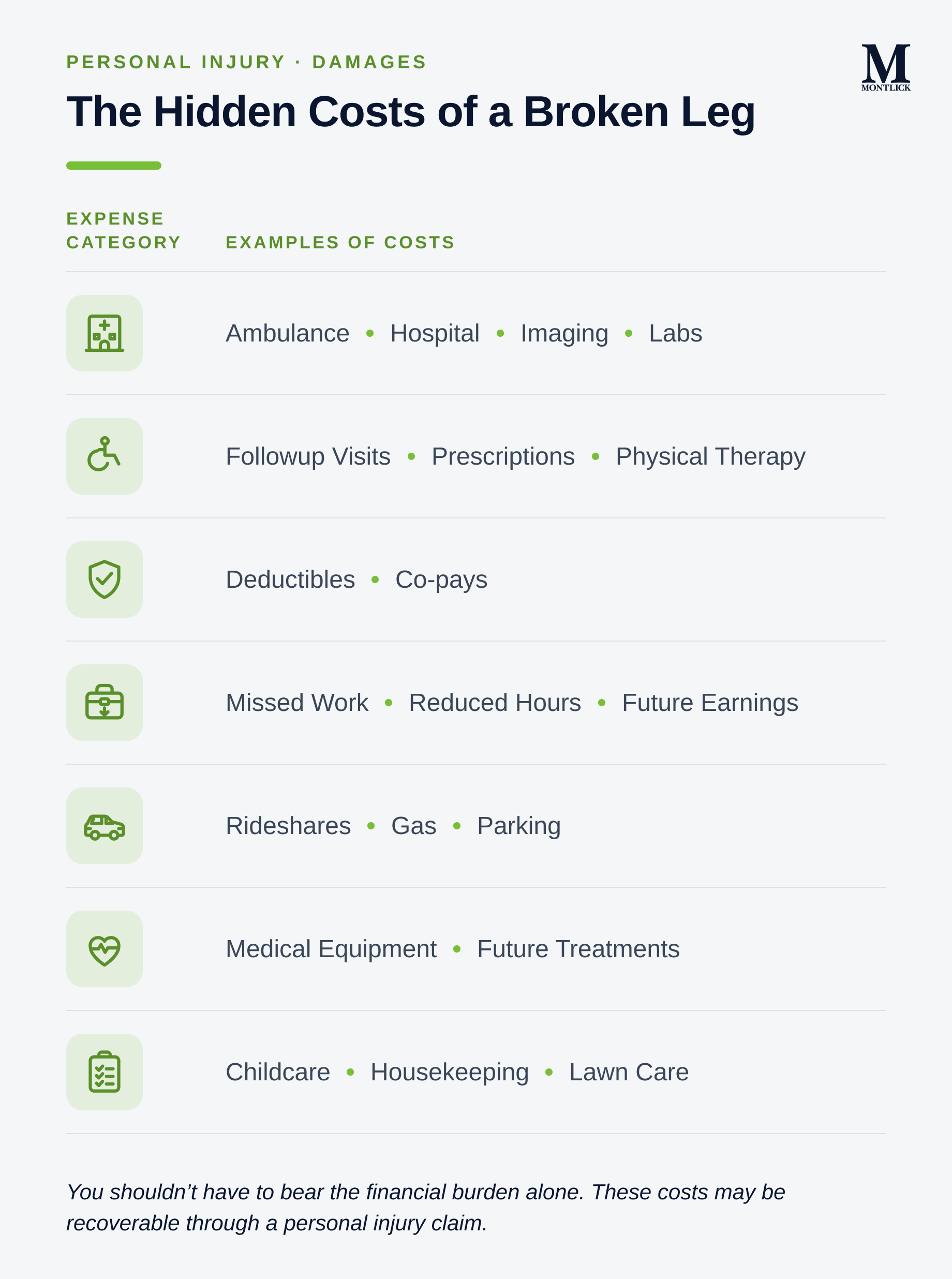
A fracture can create financial pressure quickly, even when the injury seems straightforward at first. Emergency care may include an ambulance ride, an ER visit, X-rays or CT scans, lab work, and an orthopedic evaluation. If surgery or hospitalization is needed, those costs can increase significantly.
The recovery process can also involve follow-up orthopedic visits, repeat imaging to confirm the bone is healing properly, and physical therapy. Injured people may also need medical equipment such as crutches, a boot, or a walker, along with prescription medications for pain or inflammation.
Even if an insurance company reimburses some expenses later as part of a settlement, an injured person may still be responsible upfront for deductibles, co-payments, and other out-of-pocket costs for visits, tests, prescriptions, and follow-up care.
Lost Income and Work‑related Costs
The financial impact of a broken leg often extends well beyond medical bills. For many injured people, recovery can mean weeks or months of missed work, reduced hours, or limits on what they can safely do on the job. This can be especially difficult for people whose work requires standing, walking, lifting, driving, or other physical activity.
Lost income may include time away from work after the initial injury, surgery, follow-up appointments, and physical therapy. Some people are able to return only on light duty, part-time hours, or in a lower-paying role while they heal. Others may lose overtime, bonuses, side-gig income, or other opportunities they would have earned if the injury had not happened.
In more serious cases, a leg fracture can affect a person’s long-term ability to continue in the same type of work. This is why a personal injury attorney works to document and show the full financial impact of the injury, looking beyond medical bills to the income, work opportunities, and long-term earning ability the injury may affect. Under Georgia law, an injured person may also be able to seek compensation for pain and suffering and other non-economic losses that go beyond the financial costs of the injury.
Additional Out‑of‑pocket Expenses
The costs connected to recovery do not always stop with medical treatment. For many injured people, everyday expenses can begin to add up quickly while they are trying to heal and adjust to temporary limitations.
A broken leg may make it difficult or unsafe to drive, leading to added costs for gas, parking, rideshares, taxis, or help getting to medical appointments. At home, recovery may also require extra support with housekeeping, lawn care, childcare, or daily tasks that are hard to manage while using crutches or a walker.
Some injuries may require temporary changes at home, such as a shower chair, grab bars, or a ramp. Even smaller expenses, including over-the-counter braces, medical supplies, or fees for obtaining medical records, can become part of the larger financial burden after an injury.
Long‑term Medical Intervention
Some fractures may require care long after the initial treatment is over. Depending on how the injury heals, a person may need additional physical therapy, future treatment for complications such as arthritis, or even another procedure to remove hardware placed during surgery. These long-term needs can affect both recovery and the true cost of the injury.
A broken leg can affect far more than your ability to walk. It can disrupt your work, your family responsibilities, your finances, and your sense of control during recovery. If someone else’s negligence may have caused your injury, a personal injury attorney can help identify the full impact of what happened, from medical bills and lost income to pain, limitations, and future care needs.
Every case is different, but you do not have to face the insurance process alone. Clear legal guidance can help you understand your options and protect your recovery from avoidable financial strain. Call us today at 800-529-6333 or fill out our online contact form to see how Montlick can help you recover after an accident. Your initial consultation with an attorney is always free.